Have you read our latest news?
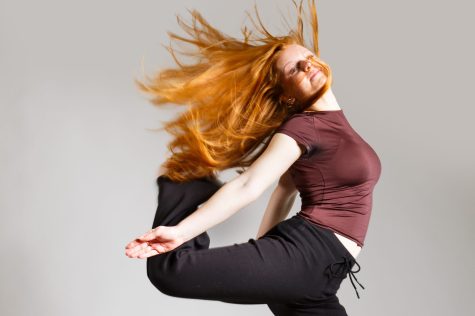
FREE Cheshire Youth Dance Sessions to launch in Chester
15 October 2026
15 October 2026
27.05.2026
6 min read
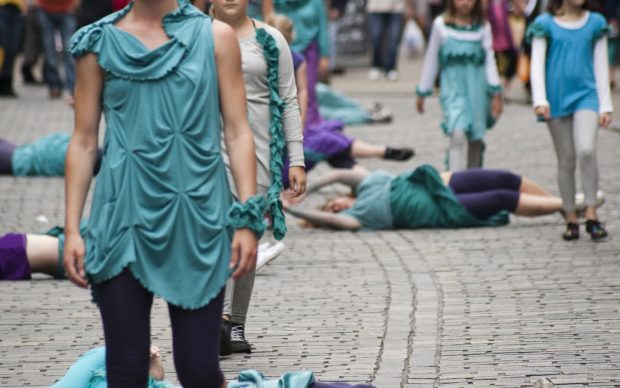
Our Director, Adam, and Creative Director, Jane, have written a new piece for Animated (People Dancing), reflecting on Cheshire Dance’s journey, the legacy we carry and the future we are helping to shape. Drawing on 50 years of community, creativity and collaboration, they consider what has been learned along the way, what continues to matter, and how these values can inform the next chapter of our work.
‘This article, first published in the Spring/Summer 2026 edition of Animated Magazine, is reproduced by permission of People Dancing. All Rights Reserved. See www.communitydance.org.uk/animated for more information.’
Adam Holloway, Director of Cheshire Dance and Jane McLean its Creative Director put the case that although community dance has become increasingly fragile in a time of austerity, rising inequality and the erosion of public services, its role in fostering connection, creativity and collective wellbeing is more vital than ever. They call for renewed commitment to valuing dance artists, protecting community‑rooted practice and sustaining a sector built on co‑creation and care.
We’ve all witnessed, since the financial crash of 2008, a relentless decline in public and voluntary sector services in our communities.
We’ve witnessed a surge of the political right, blowing cold winds through our streets, forces beyond our control seeking to divide communities.
And in 2026, the cost-of-living crisis continues to rage all around us. We all feel it.
Challenge after challenge has beset the cultural sector, arts in education, arts in health. The need for professional services in our communities has gone through the roof at the same time as those services are being systemically removed. The community dance sector is no different.
When community dance is challenged and reducing in scale, when young people are denied access to dance in schools and youth clubs, when so much talent has left the sector, amazing people forced to retrain to work in more sustainable careers, we recognise now, even more than ever, the need to protect our sector.
At Cheshire Dance, our current team, of 50+ staff and freelance artists, is situated on the shoulders of giants; upon 50 years of practice thoughtfully, creatively, developed and refined and passed between community dancers, artists, teachers and other professionals, shared with openness and generosity.
We are custodians of a rich heritage of practice. It is practice:-
Poring over the Cheshire Dance archive recently, we came across a programme for Dreams of Midnight, Dreams of Paradise created in 1984 as a result of a workshop with Phoenix Dance Company. The introduction by Veronica Lewis, founding Artistic Director of Cheshire Dance, says: “The working process itself aims to give young people in Cheshire a chance to work in a situation of equal status alongside professional dancers, choreographers, musicians and designers, sharing the piece from beginning to end. It is a particularly rewarding and exciting process and involves none of the artistic compromises for which work of this nature is often criticised.”
This evidence reinforces our belief that co-creation isn’t new, and wasn’t something handed down to community dance from policy makers. It’s been right there from the beginning, and dance artists have been careful caretakers of it through times when it’s been hailed as the highest standard, and those when it’s been hidden behind notions of ‘excellence’ belonging exclusively to professionals on stage.
This year we’re undertaking in-depth, practice-led research to articulate of all this, our organisation’s Artistic Practice. We’ll be re-establishing a shared understanding of Cheshire Dance’s practice alongside the freelance artists and participants who help to shape it, because Cheshire Dance has never been about one creative voice or leader. It has always been shaped and led by the creativity of those who engage with it. Our role is to amplify the creative expression of those we dance with – including the dance artists who travel from session to session, project to project, school, to day centre, to youth centre and on again. Cheshire Dance only exists because of them. We must value their artistry, their care, their experience and their skills in all that we do. Now, perhaps more so than at any other point during our history, it feels harder to build a sustainable career as a dance artist – we’re so grateful to those who do, and we commit to investing in them and their development not only for Cheshire Dance’s own future, but for the sector as a whole and all the participants we collaborate with. Dance artists are an invaluable resource, carrying with them years of embodied knowledge. We must recognise the pedagogy our sector is built on, see it as at risk, and act to protect it, slow down the loss and take steps to rebuild.
We must not take for granted….
We must not take for granted….
We must not take for granted the generosity that is keeping this sector together. We must all recognise the precarity of artists’ livelihoods, that pay has not kept up with inflation and do everything we can to invest in the sustainability of our sector.
There are fewer and fewer community dance organisations whose primary focus is on dancing with those who might not otherwise have opportunities to dance, in places where dance is unexpected, but can be quietly powerful. At Cheshire Dance we’re committed to being advocates for community dance, to continuing to find the cracks where it can flow and flourish, to making spaces for any-body to dance, and to reimagining how those dances might be.
If you read Francois Matarrasso’s A Restless Art (1), he takes us back to the time the community arts movement began when, in the late 60’s and early 70’s, artists sought to break the stranglehold of elitism and patriarchy. They succeeded, but it must have been the toughest fight as no-one even knew back then what community art was.
Now, most people know. Not just artists and funders but whole societies. Artists are active to a greater or lesser extent, funded or unfunded, in every community. Not enough, but the practice is recognised and widespread. Most people in the UK could cite a family member, a friend or others in their community as having taken part in organised community art projects.
So, if there is widespread awareness, not just amongst artists, but funders and policy-makers, public sector professionals, family members and whole communities, why does it feel so hard? We look to our colleagues around us, the broader community, policy people and funders. We see that we’re on the same team. People who work in arts funding do so because they want to fund the arts. And it’s the same for people who work in the public sector and in philanthropic trusts.
As ticket prices go up all around us and the cost of art of all kinds goes up, we must resist the return to elitist art, only available to those that can pay. Art belongs to people, to communities, to everyone.
We’ve never needed dance more. In a time of AI, spiralling cost-of-living, culture wars, failing high streets, mental and physical health crises, outsourcing, disconnected in virtual reality or social networks and less often connected in-person, dance offers us a way home to ourselves; to our living breathing selves; to the wisdom and knowledge of the body; to the joy of moving, creating and sharing with others.
Dance offers us connection, a place to meet, a shared understanding, a way of expressing what we struggle to express in words. It can challenge us with its physicality, nourish us with its creativity, care for our vulnerabilities and enable us to be seen and to see others in ways that transcend language, borders, logic or analysis. It can offer powerful messages, food for deep thought and moments of pure joy and elation.
We have had the privilege to learn with and from dance artists and community dancers over the last 50 years, listening deeply, full-bodied, over time. This hasn’t only influenced our dance practice in the studio (or day centre, school, hospital and more) but has offered us a way to navigate the world and urges us to explore how we might lead with the wisdom of the body beyond the dance class.
Can we embrace the embodied wisdom of dance artists? Could this wisdom continue to shift perspectives, systems, structures? Can we create together a sector where care, compassion, choice, instinct and creativity are valued in and outside the studio, on and off stage?
Today, the mission at Cheshire Dance remains the same. We go on investing creative resources deeply within communities and amongst artists. We work with diversity at the forefront of our minds, co-creation in our souls, and artful equity as a goal. We are not alone, we are part of the Community Arts movement. And that will never be put back in the box.